Articles
Thoughtful analysis and commentary on law, politics, constitution, society, and international affairs.
Categories
Tags
Content Type
Sort & Date
A Test for Jamaat, a Test for Democracy
Jamaat-e-Islami’s emergence as Bangladesh’s principal opposition presents an opportunity to build a more accountable parliamentary democracy. This article argues that the party must prioritise parliamentary scrutiny, establish its promised shadow cabinet and present a clear reform programme. Its credibility will depend on offering practical policy alternatives and upholding democratic principles both in opposition and in government.
Abolition of the Supreme Court Secretariat: Is the Government Returning to Its Old Ways?
The abolition of Bangladesh’s Supreme Court Secretariat raises concerns about judicial independence and renewed executive control. This article examines the constitutional promise of an independent judiciary, successive governments’ failure to fulfil it, and the need for lasting administrative and financial autonomy to protect citizens’ right to justice.
Can Jamaat’s Welfare Politics Challenge BNP’s Power Politics?
Jamaat’s welfare politics could challenge BNP’s power-centred approach by building public trust through social service, organisational discipline and community engagement. Its success, however, depends on inclusive support, transparent leadership and credible policies. Ultimately, both parties will be judged by how effectively they serve citizens and hold their own members accountable.

Justice After Authoritarianism: Bangladesh’s Dangerous Legal Shortcut
Bangladesh’s pursuit of justice after authoritarian rule demands credible evidence, fair trials and a legal framework capable of addressing systemic repression. Taking legal shortcuts risks undermining accountability and repeating the cycle of politicised justice.

The Battle for Bangladesh’s New Political Centre
Since August 2024, Bangladesh’s political landscape has been reshaped. The BNP is moving towards the centre, Jamaat has emerged as a leading force on the right, the Awami League may retain a social base, and the NCP is still defining its identity. The deeper challenge is to build a political order in which parties can compete under accountable government, independent institutions and shared constitutional rules.
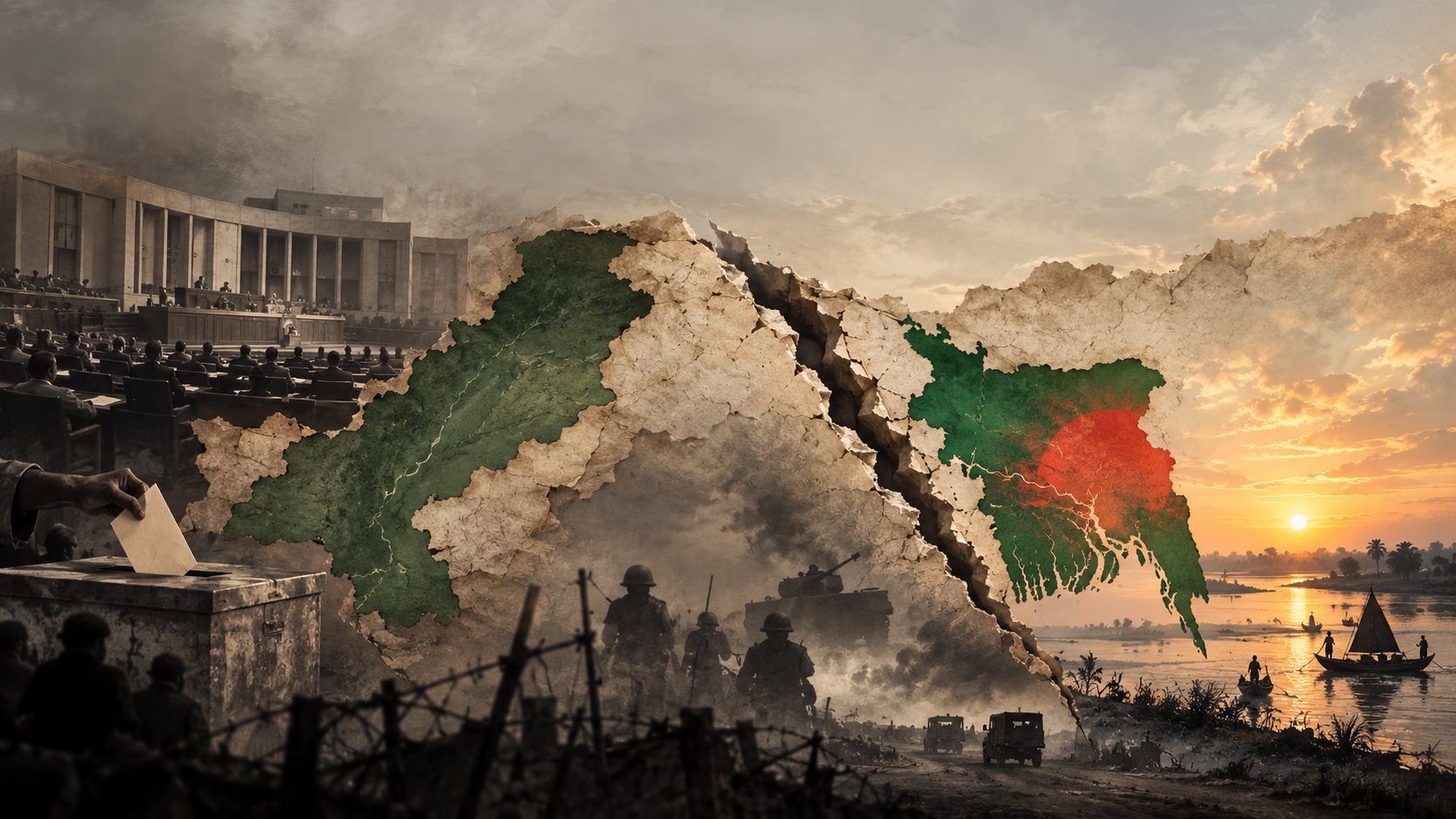
Why Pakistan Broke Apart: My Reflections
Pakistan did not break apart merely because of geographical separation or cultural differences. Its collapse resulted from the concentration of power, the destruction of democracy, regional inequality, ideological inconsistency, and the failure to recognise Bengalis as equal political partners. The rejection of the 1970 electoral mandate and the military operation of 25 March transformed a political crisis into a war for independence. India and Cold War politics influenced the outcome, but Pakistan’s rulers had created the internal crisis. The central lesson of 1971 is that diversity does not destroy a state; injustice, authoritarianism, and the denial of popular consent do.
The July Charter and the unfinished question of reform in Bangladesh
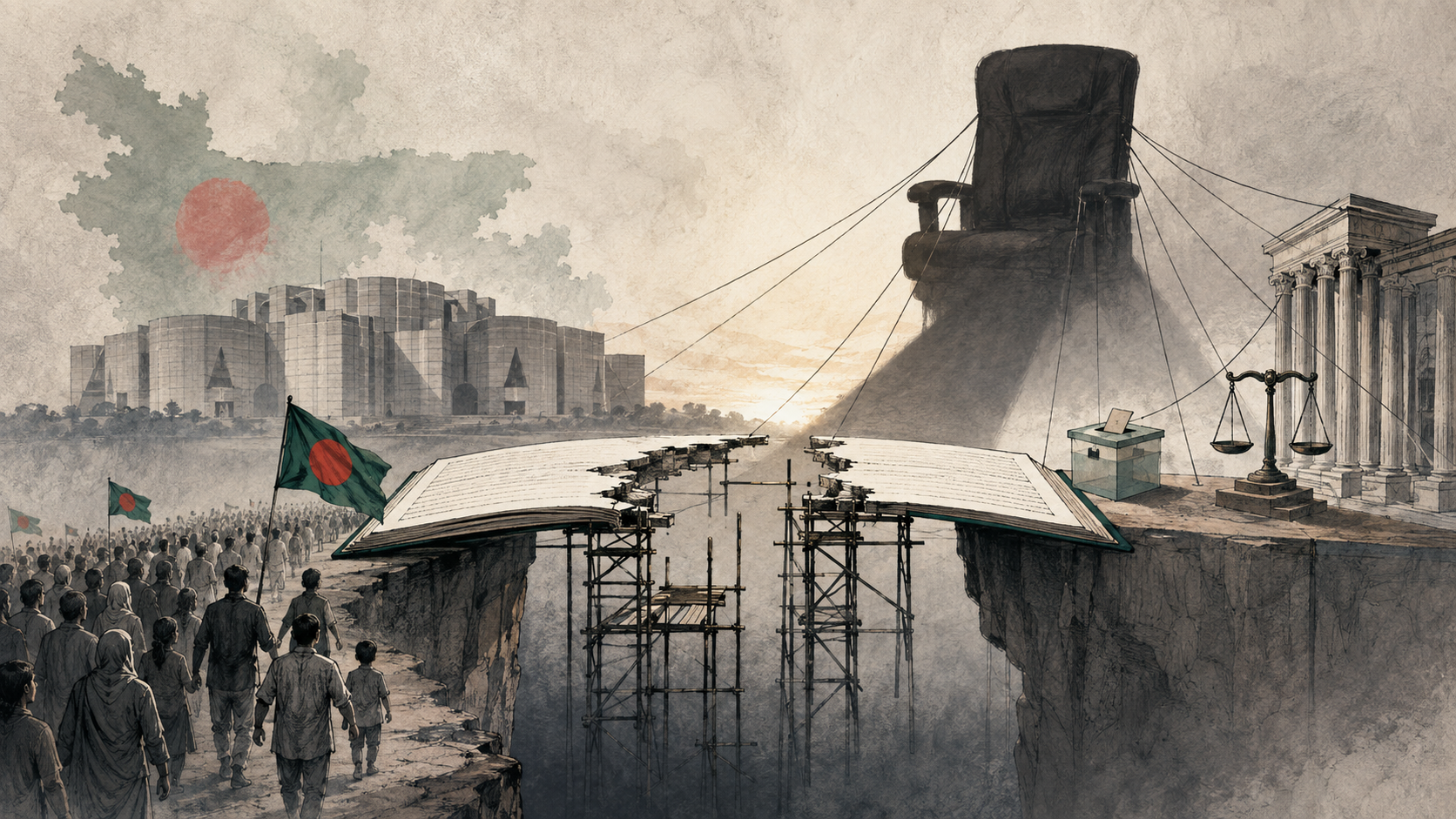
After the 2024 uprising, Bangladesh seemed to stand before a rare constitutional moment: a chance not merely to change a government, but to rethink how the state itself works. Yet the fate of the July National Charter, the controversy over the 2026 referendum, the cancellation of key reform ordinances and the deep ambivalence of major political actors now raise a harder question: does Bangladesh’s political class truly want reform, or only the language of reform?
1971, Jamaat and the Question of Apology: How Many Times, and in What Language?
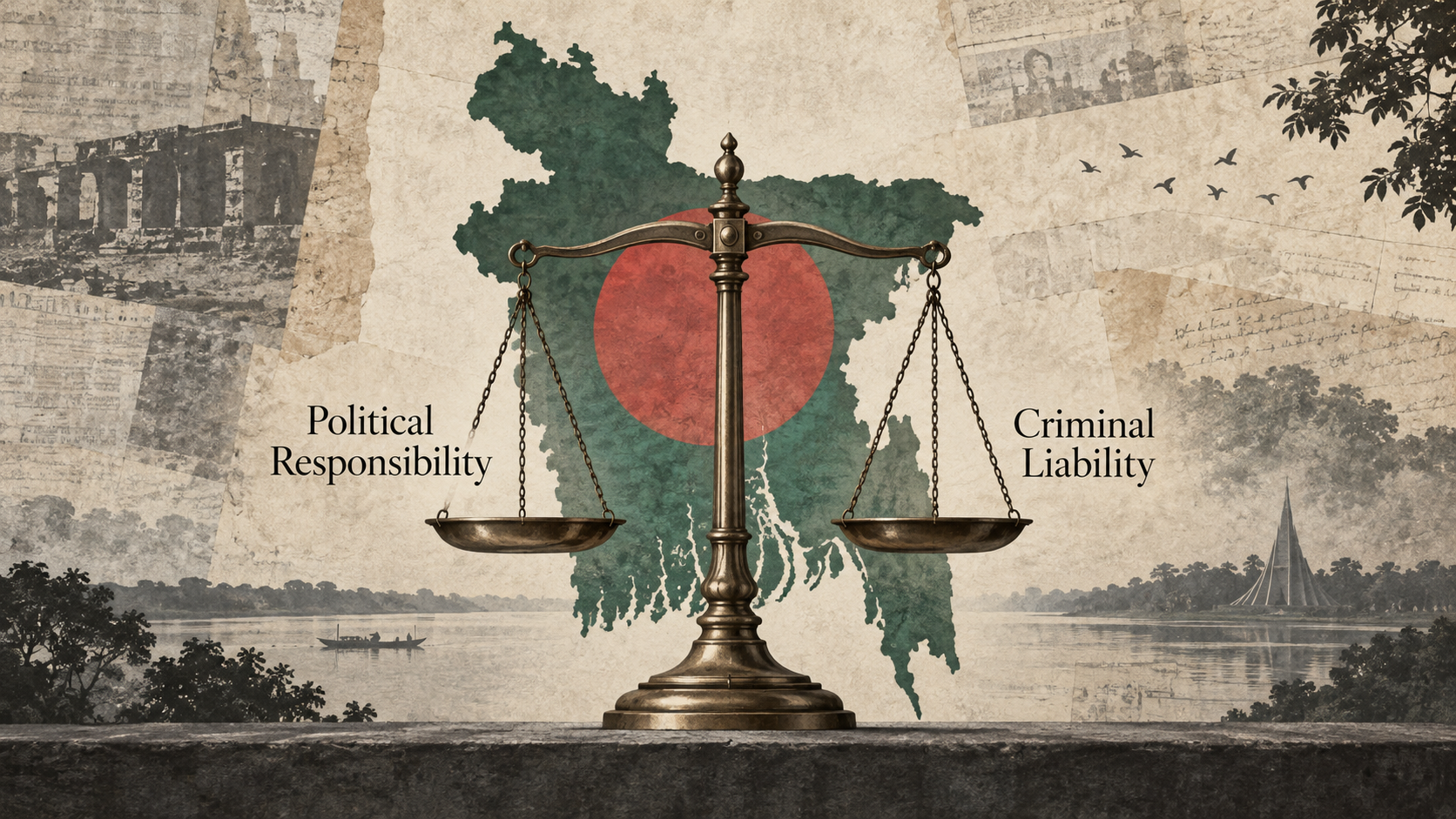
Jamaat-e-Islami’s support for a united Pakistan in 1971 was a political decision that must be distinguished from individual criminal responsibility and the atrocities committed by the Pakistani military. Jamaat’s leaders have expressed regret and offered apologies on several occasions, yet critics continue to question their wording and sincerity. The article argues that allegations of war crimes require credible evidence and impartial trials, not merely demands for apology. It also calls for the same historical and moral standards to be applied to all political parties. If Jamaat’s apologies remain unacceptable, its critics should clearly explain what language and acknowledgement they require.
Bengal and the Promise of Pakistan: The History We Cannot Skip
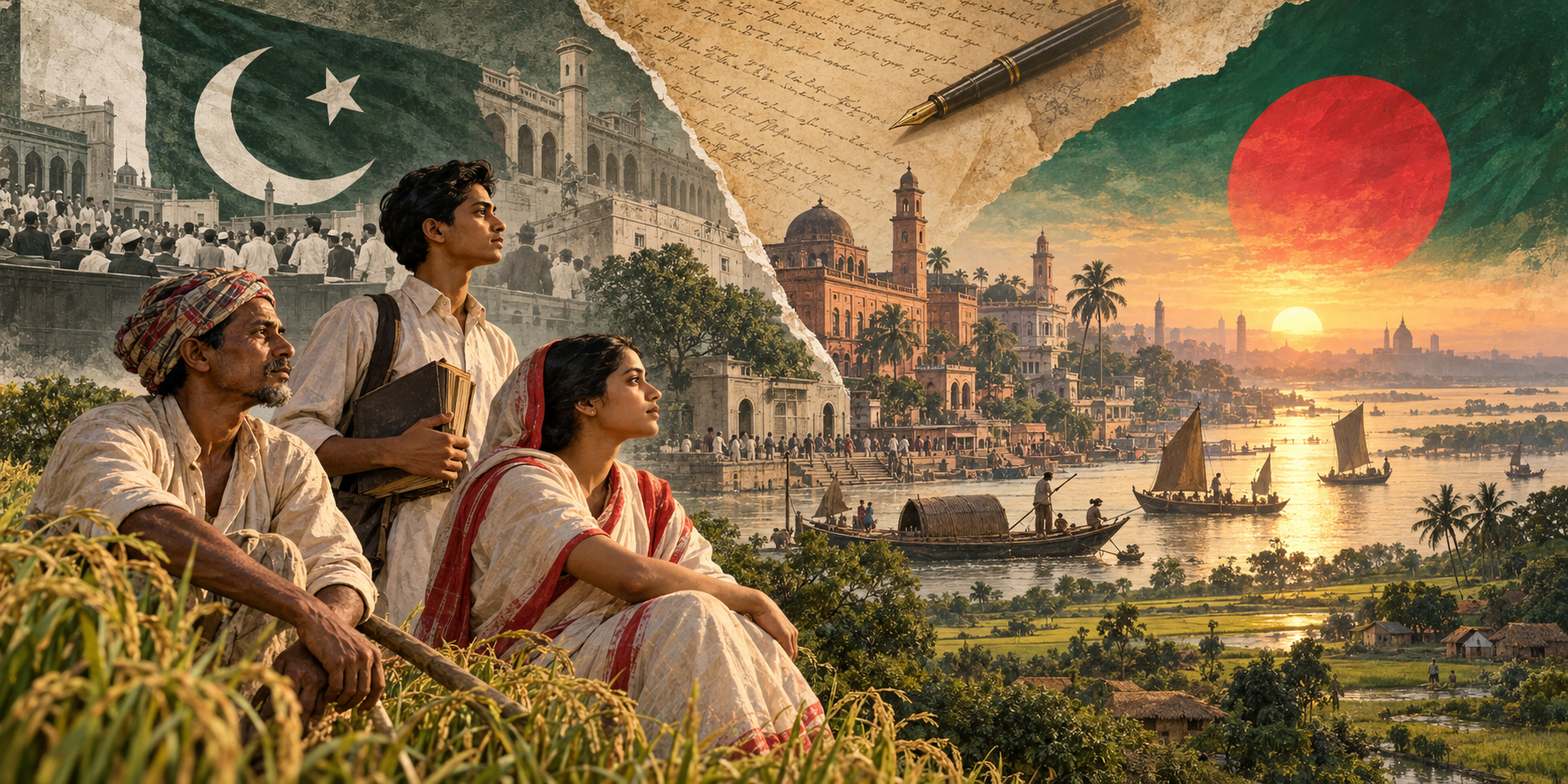
Bengali Muslim support for Pakistan reflected aspirations for political representation, economic opportunity, education and dignity alongside religious identity. Bengal’s leaders played important roles in establishing the Muslim League, presenting the Lahore Resolution and pursuing an undivided Bengal. Pakistan’s subsequent failure to fulfil those expectations helps explain why support for its creation and the later struggle for Bangladesh’s independence can be understood as a continuing pursuit of rights, autonomy and dignity rather than a contradiction.
Jamaat-e-Islami and 1971: Historical Complexity and the Question of Assessment
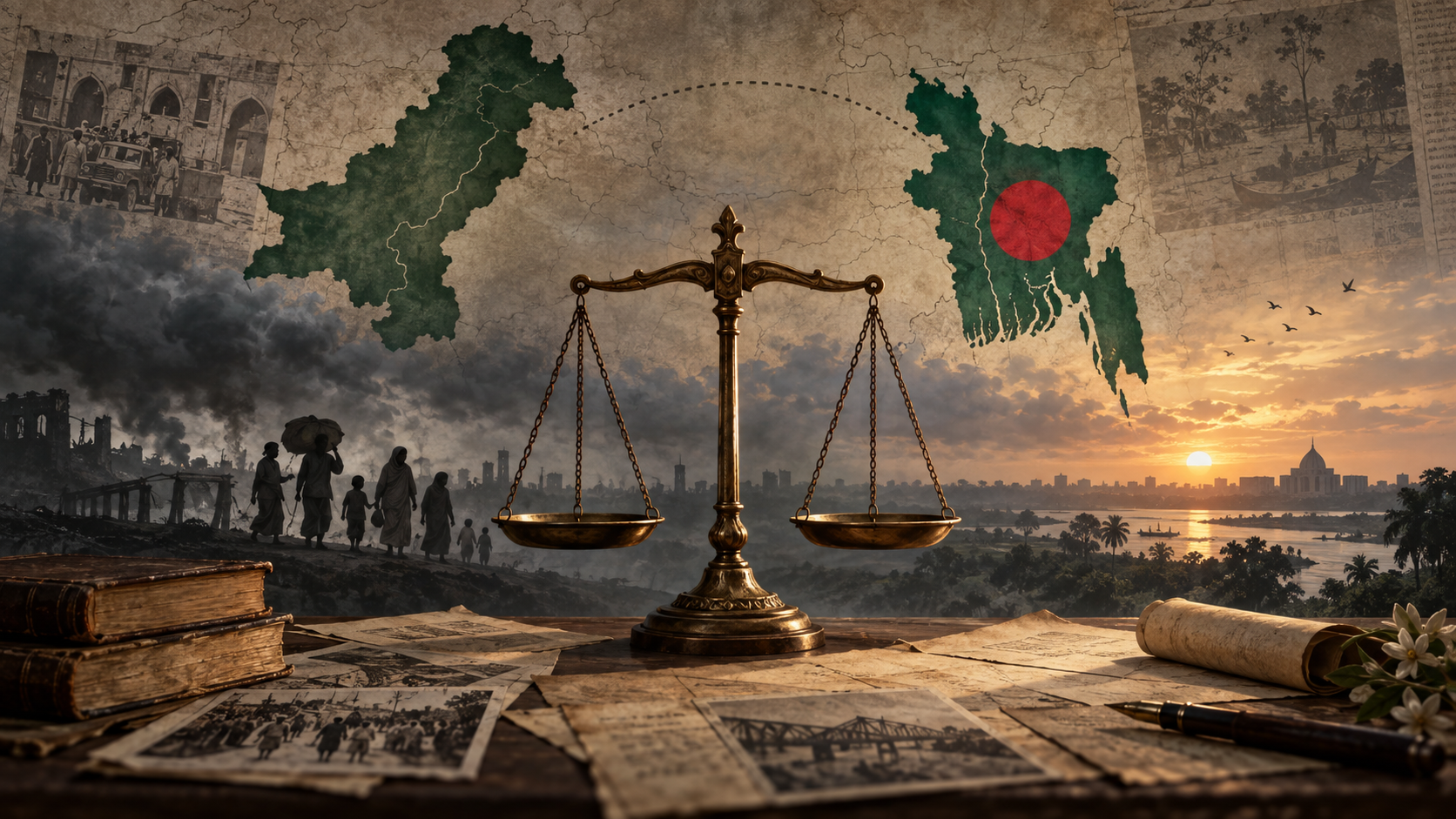
Jamaat-e-Islami’s position in 1971 must be understood within the wider historical, political and ideological crisis surrounding the division of Pakistan. Its support for a united Pakistan was largely rooted in the belief that Muslim political unity should be preserved and that East Pakistan’s legitimate grievances could be resolved through reform and negotiation. Ghulam Azam recognised the growing political divide and warned that the failure to reach a settlement would invite military intervention and disaster. The atrocities and immense human suffering of 1971 must be acknowledged, and those responsible for crimes should face fair and impartial justice. However, supporting a particular political arrangement should not automatically be treated as evidence of involvement in criminal acts. A mature assessment of 1971 therefore requires both accountability and a willingness to understand its complex historical realities.