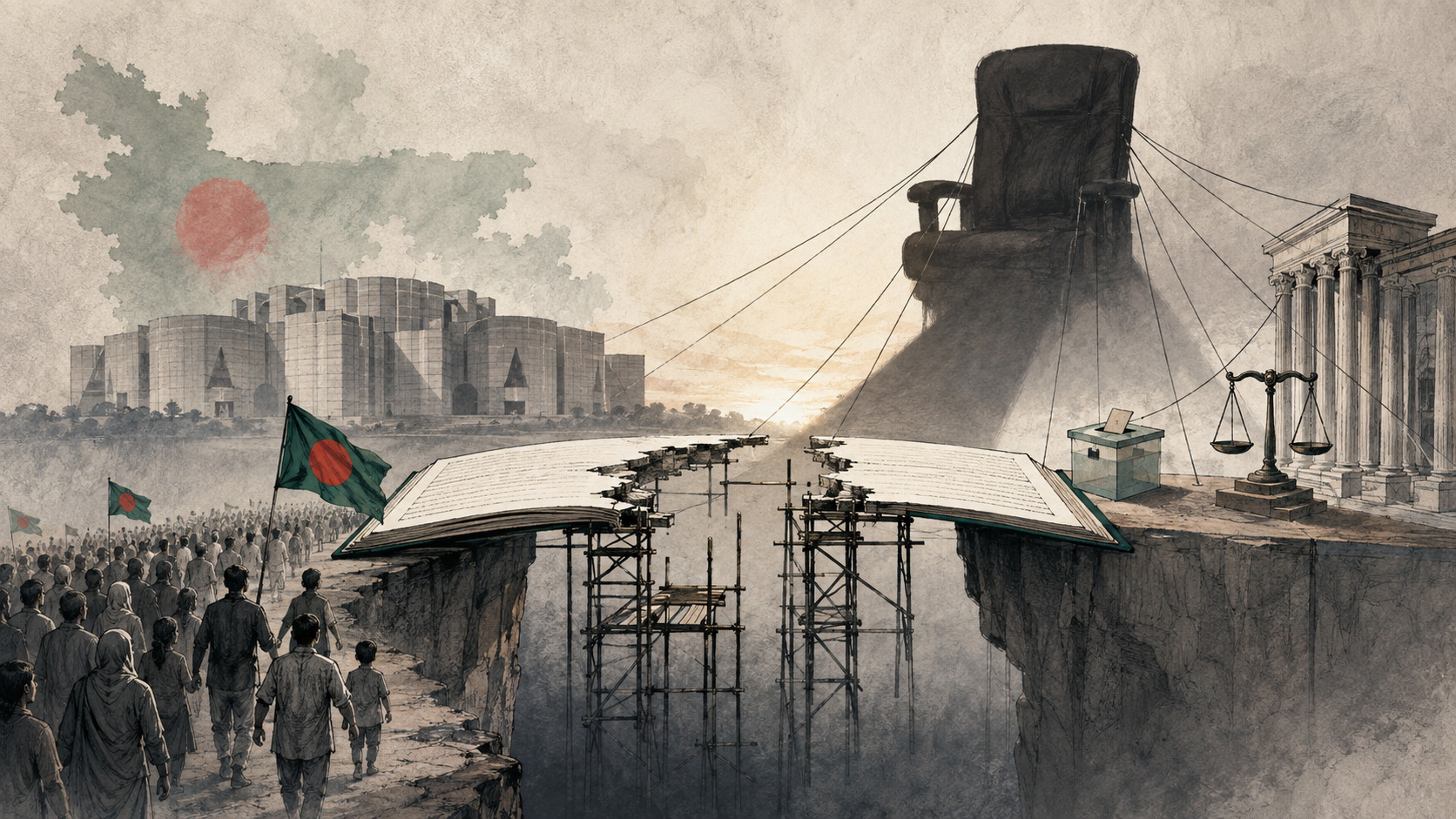
After the 2024 uprising, Bangladesh seemed to stand before a rare constitutional moment: a chance not merely to change a government, but to rethink how the state itself works. Yet the fate of the July National Charter, the controversy over the 2026 referendum, the cancellation of key reform ordinances and the deep ambivalence of major political actors now raise a harder question: does Bangladesh’s political class truly want reform, or only the language of reform?
There are moments in a nation’s history when politics ceases to be only about who governs and becomes instead a struggle over how the state should be governed. Bangladesh has arrived at such a moment before, only to retreat from it. The period following the 2024 mass uprising appeared, at least for a time, to offer another such opening. The proposed July National Charter 2025 was not presented as a routine policy programme. It emerged as something more ambitious: an attempt to lay down a new political understanding about constitutional reform, democratic accountability, institutional balance and the future architecture of the republic.
That is why the July Charter matters. It was never simply about technical amendment or administrative rearrangement. It was about whether Bangladesh could move beyond a political order built on concentrated executive power, party domination of institutions and a culture of impunity. It raised the possibility of a new social contract: one in which elections would matter, but so would the independence of institutions; one in which democracy would mean more than the ritual of voting; one in which the state might finally begin to function under a meaningful structure of restraint, accountability and public trust.
To understand why this mattered, one has to begin with the deeper pattern of Bangladesh’s political history. The country began its independent life with an ambitious constitutional vision. Democracy, social justice, equality and human dignity were meant to form the normative foundations of the republic. But the lived trajectory of the state was far more troubled. Military rule, constitutional manipulation, partisan centralisation and the repeated weakening of autonomous institutions gradually hollowed out the promise of constitutionalism. Bangladesh remained formally constitutional, but the constitutional order itself became increasingly vulnerable to political capture.
২০২৪ সালের গণ-অভ্যুত্থানের পর বাংলাদেশ যেন এক বিরল সাংবিধানিক সন্ধিক্ষণে এসে দাঁড়িয়েছিল—যেখানে সুযোগটি কেবল একটি সরকার পরিবর্তনের মধ্যে সীমাবদ্ধ ছিল না; বরং রাষ্ট্র কীভাবে পরিচালিত হবে, তার সামগ্রিক কাঠামো নতুন করে ভাবার সম্ভাবনাও সৃষ্টি হয়েছিল। কিন্তু জুলাই জাতীয় সনদের পরিণতি, ২০২৬ সালের গণভোট নিয়ে বিতর্ক, গুরুত্বপূর্ণ সংস্কার অধ্যাদেশ বাতিল এবং প্রধান রাজনৈতিক শক্তিগুলোর গভীর দ্বিধাগ্রস্ততা এখন আরও কঠিন একটি প্রশ্ন সামনে এনেছে: বাংলাদেশের রাজনৈতিক শ্রেণি কি সত্যিই সংস্কার চায়, নাকি তারা কেবল সংস্কারের ভাষাটুকুই ব্যবহার করতে চায়?
একটি জাতির ইতিহাসে এমন কিছু মুহূর্ত আসে, যখন রাজনীতি কেবল কারা রাষ্ট্র পরিচালনা করবে—এই প্রশ্নের মধ্যে সীমাবদ্ধ থাকে না; বরং রাষ্ট্র কীভাবে পরিচালিত হওয়া উচিত, সেই প্রশ্নকে কেন্দ্র করেই মূল লড়াই শুরু হয়। বাংলাদেশ এর আগেও এমন সন্ধিক্ষণে এসে দাঁড়িয়েছে, কিন্তু শেষ পর্যন্ত সেখান থেকে পিছিয়ে গেছে। ২০২৪ সালের গণ-অভ্যুত্থান-পরবর্তী সময় অন্তত কিছুদিনের জন্য হলেও তেমনই আরেকটি ঐতিহাসিক সম্ভাবনার দ্বার উন্মোচন করেছিল। প্রস্তাবিত জুলাই জাতীয় সনদ ২০২৫ কোনো গতানুগতিক নীতি-কর্মসূচি হিসেবে উপস্থাপিত হয়নি। এটি আরও উচ্চাভিলাষী একটি উদ্যোগ হিসেবে আবির্ভূত হয়েছিল—সাংবিধানিক সংস্কার, গণতান্ত্রিক জবাবদিহি, প্রাতিষ্ঠানিক ভারসাম্য এবং প্রজাতন্ত্রের ভবিষ্যৎ কাঠামো সম্পর্কে একটি নতুন রাজনৈতিক সমঝোতা প্রতিষ্ঠার প্রচেষ্টা হিসেবে।
এ কারণেই জুলাই সনদ গুরুত্বপূর্ণ। এটি কখনোই কেবল কিছু কারিগরি সংশোধন কিংবা প্রশাসনিক পুনর্বিন্যাসের বিষয় ছিল না। এর মূল প্রশ্ন ছিল—বাংলাদেশ কি নির্বাহী ক্ষমতার অতিমাত্রিক কেন্দ্রীকরণ, রাষ্ট্রীয় প্রতিষ্ঠানের ওপর দলীয় আধিপত্য এবং দায়মুক্তির সংস্কৃতির ভিত্তিতে গড়ে ওঠা রাজনৈতিক ব্যবস্থা অতিক্রম করতে পারবে? সনদটি একটি নতুন সামাজিক চুক্তির সম্ভাবনা সামনে এনেছিল—যেখানে নির্বাচন গুরুত্বপূর্ণ হবে, কিন্তু একই সঙ্গে রাষ্ট্রীয় প্রতিষ্ঠানগুলোর স্বাধীনতাও সমান গুরুত্ব পাবে; যেখানে গণতন্ত্রের অর্থ কেবল ভোট প্রদানের আনুষ্ঠানিকতায় সীমাবদ্ধ থাকবে না; এবং যেখানে সংযম, জবাবদিহি ও জনগণের আস্থার কার্যকর কাঠামোর অধীনে রাষ্ট্র অবশেষে পরিচালিত হতে শুরু করবে।
এর গুরুত্ব বুঝতে হলে বাংলাদেশের রাজনৈতিক ইতিহাসের গভীরে প্রোথিত ধারাটির দিকে তাকাতে হবে। স্বাধীনতার সূচনালগ্নে দেশটি একটি উচ্চাভিলাষী সাংবিধানিক স্বপ্ন নিয়ে যাত্রা শুরু করেছিল। গণতন্ত্র, সামাজিক ন্যায়বিচার, সাম্য এবং মানবিক মর্যাদা প্রজাতন্ত্রের নৈতিক ও আদর্শিক ভিত্তি হওয়ার কথা ছিল। কিন্তু রাষ্ট্রের বাস্তব যাত্রাপথ ছিল অনেক বেশি সংকটপূর্ণ। সামরিক শাসন, সংবিধানের রাজনৈতিক অপব্যবহার, দলীয় ক্ষমতার কেন্দ্রীকরণ এবং স্বাধীন প্রতিষ্ঠানগুলোকে ধারাবাহিকভাবে দুর্বল করে দেওয়ার মধ্য দিয়ে সাংবিধানিকতার প্রতিশ্রুতি ক্রমেই অন্তঃসারশূন্য হয়ে পড়ে। আনুষ্ঠানিকভাবে বাংলাদেশ একটি সাংবিধানিক রাষ্ট্র হিসেবেই টিকে ছিল; কিন্তু সাংবিধানিক ব্যবস্থাটি নিজেই ক্রমশ রাজনৈতিক দখলদারত্বের কাছে অসহায় হয়ে পড়ে।

Comments (0)
No comments yet. Be the first to share your thoughts!
Your email address will not be published. Comments are moderated.